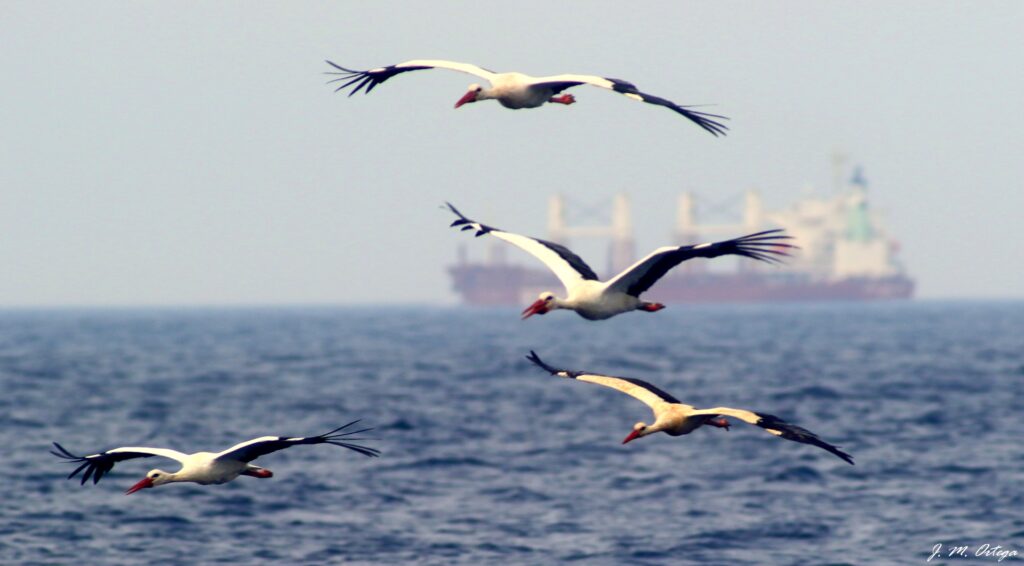
The Strait of Gibraltar represents one of the most important migratory corridors on Earth. Every year, millions of birds cross the narrow stretch of sea separating Europe from Africa, concentrating along this natural bottleneck during their seasonal movements. For large soaring birds, which rely on thermal currents to reduce the energy cost of flight, crossing the Strait represents one of the most challenging and spectacular stages of their entire migratory journey.
This naturalistic expedition will focus on the observation of the spring migration of raptors and many other bird species across some of the most important birdwatching hotspots in southern Andalusia. We will explore the renowned observation sites between Tarifa and the Gibraltar Strait, as well as the coastal wetlands and natural areas along the south-eastern side of Doñana Natural Park, focusing on habitats of exceptional importance for local and migratory birdlife.
Our departures in early March coincide with the first major waves of spring migration. During this period, numerous raptors begin to cross the Strait, accompanied by storks and an increasing number of passerines and other migratory species heading towards their European breeding grounds. The intensity and composition of the migration change daily according to weather conditions, making every day in the field a unique and unpredictable experience.
Beyond the migratory spectacle, the journey will offer outstanding opportunities to explore the extraordinary biodiversity of southern Andalusia. Extensive coastal wetlands, estuaries, salt pans, traditional agricultural landscapes and sea cliffs host a remarkable variety of species, making this corner of the Iberian Peninsula one of the most fascinating birdwatching destinations in Europe.
As with all our itineraries, biodiversity will be the true protagonist of the experience. The tour will combine observation sessions at the best migration viewpoints with exploration of some of Andalusia’s most important coastal ecosystems and wetlands, while also discovering the landscapes, cultural heritage and rich gastronomic traditions of this extraordinary region.
- Tarifa and the Strait of Gibraltar: Only a few kilometres of sea separate Europe from Africa, making the Strait of Gibraltar one of the most important migratory corridors in the world. Every spring, millions of birds cross this natural bottleneck on their journey towards European breeding grounds. The coastal mountains and the particular weather conditions of the area concentrate the migratory flow, offering spectacular opportunities to observe large soaring birds, including raptors, storks and many other species. In recent years, the Strait has gained even greater ornithological importance due to the progressive expansion into Europe of several North African species, which have begun breeding in southern Andalusia after crossing the narrow sea channel separating the two continents. This phenomenon makes the area a true natural laboratory for observing changes in species distribution and the effects of environmental changes on bird populations. Tarifa represents the main observation point for this extraordinary natural spectacle, thanks to its numerous viewpoints overlooking the Strait and the variety of coastal habitats that characterise the area.
- Sanlúcar de Barrameda and Salinas de Bonanza: Located at the mouth of the Guadalquivir River, within the wider Doñana natural area, Sanlúcar de Barrameda occupies a strategic position along one of Western Europe’s main migratory routes. Nearby are the Salinas de Bonanza, one of the most important salt pan complexes in western Andalusia, characterised by saline ponds, channels, embankments and mudflats of exceptional ecological value. These habitats represent crucial stopover, feeding and resting areas for numerous waterbirds and migratory species. Greater Flamingos, Spoonbills, Avocets, Black-winged Stilts, shorebirds, terns and gulls are among the main highlights of this coastal mosaic, which during spring migration is further enriched by the passage of raptors, passerines and many other species moving towards their European breeding grounds. The combination of estuary, salt pans and proximity to Doñana makes this area one of the most interesting birdwatching hotspots in western Andalusia.
- Chipiona: Located on the Atlantic coast, Chipiona represents one of the most interesting coastal birdwatching sites in western Andalusia. Its beaches, intertidal rocky platforms, dunes and surrounding wetlands provide excellent opportunities for observing shorebirds, gulls, terns and other coastal species. During spring migration, its proximity to the Guadalquivir estuary and Doñana National Park makes the area particularly interesting also for observing raptors and passerines moving along the coastline during their northward journey.
- Ronda: Perched on a spectacular rocky plateau and divided by the impressive Tajo Gorge, Ronda is one of the most fascinating towns in Andalusia. Beyond its extraordinary historical and scenic value, the surrounding landscape is characterised by Mediterranean forests, cliffs and mountain habitats supporting a rich wildlife community. The rocky walls around Ronda provide ideal nesting sites for several raptor species, making this area an interesting stop not only from a cultural perspective but also for nature and birdwatching enthusiasts.
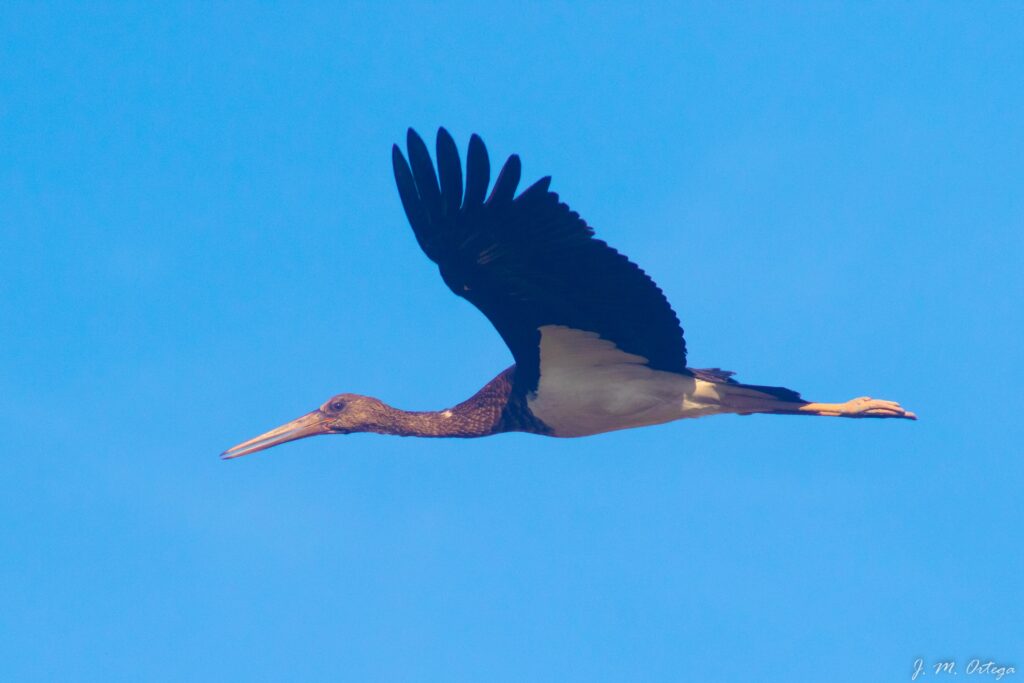
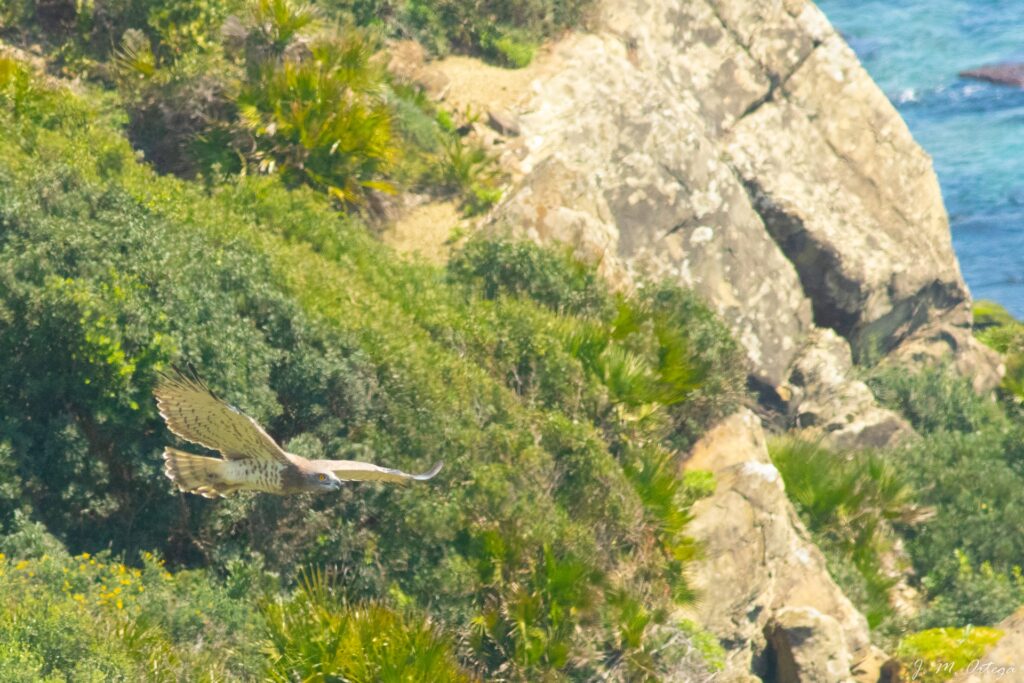
Numerous bird species, including dozens of raptors involved in the spring migration across the Strait of Gibraltar. Among the most characteristic species of Mediterranean and Iberian habitats, we may observe Spanish Imperial Eagle (Aquila adalberti), Bonelli’s Eagle (Aquila fasciata), Cinereous Vulture (Aegypius monachus), Griffon Vulture (Gyps fulvus), Black Stork (Ciconia nigra), Stone-curlew (Burhinus oedicnemus), Iberian Green Woodpecker (Picus sharpei), Thekla’s Lark (Galerida theklae), Black Wheatear (Oenanthe leucura) and Iberian Azure-winged Magpie (Cyanopica cooki).
The coastal areas and wetlands around the Guadalquivir estuary will also offer opportunities to observe specialist species such as White-headed Duck (Oxyura leucocephala), Marbled Teal (Marmaronetta angustirostris) and Purple Swamphen (Porphyrio porphyrio). Particularly interesting will be the search for some North African species that have recently expanded their range into southern Andalusia, including Laughing Dove (Spilopelia senegalensis) and House Bunting (Emberiza sahari), providing a unique opportunity to observe ongoing changes in the distribution of Mediterranean birdlife.
DAY 1: Meeting with the local guide in Malaga and transfer towards Tarifa, along the Strait of Gibraltar. First observations of the spring migration of large soaring birds and birdwatching activities at the main viewpoints of the area. Dinner and overnight stay in Tarifa.
DAY 2: Full day dedicated to birdwatching along the Strait of Gibraltar and exploration of the main natural hotspots around Tarifa, searching for numerous migratory raptors and characteristic species of Mediterranean habitats. Dinner and overnight stay in Tarifa.
DAY 3: Sunrise observations along the Strait of Gibraltar. Full day dedicated to birdwatching and exploration of coastal habitats, wetlands and surrounding natural areas, searching for resident and migratory species. Dinner and overnight stay in Tarifa.
DAY 4: Sunrise observations along the Strait of Gibraltar. Transfer towards the Atlantic coast and birdwatching in Sanlúcar de Barrameda and nearby hotspots, including the Salinas de Bonanza, important wetlands located at the mouth of the Guadalquivir River. In the afternoon, visit and sunset observations in Chipiona. Dinner and overnight stay.
DAY 5: Transfer towards natural hotspots north of Malaga. Stop in Ronda and a full day dedicated to birdwatching between the Lagunas de Campillos and El Torcal de Antequera, areas of great interest for waterbirds, raptors and species associated with Mediterranean and rocky habitats. Return to Malaga and end of the tour.
The group will be accompanied throughout the entire tour by our tour leader and the expert local guide from Ojos de Doñana.
For more information contact the organizers.
What is included:
- Overnight stays (single and double option).
- Meals (4 breakfasts, 5 packed lunches, 4 dinners – drinks not included).
- Internal transfers by van, including fuel costs, tolls, parking.
- Local expert zoological guide of Wild Doñana.
- Scientific accompaniment by zoologist for the duration of the trip, with support material for wildlife observations (binoculars, spotting scope, field guides, etc.).
- Travel insurance.
What’s not included:
- Flights.
- Entrance to the monuments and any tips to local guides.
- Everything not mentioned in the previous item.
Possibility to request a quote including airfare, with any additional nights, depending on personal needs.
The rate includes basic travel insurance.
For further information regarding the possibility of taking out additional insurance policies, contact the organizers.
Penalties in the event of cancellation: In the event of unmotivated withdrawal of the contract by the consumer, the penalties are equal to 100% of the entire participation fee, in addition to non-refundable insurance premiums.
Number of participants: Minimum 4
If the minimum group is not reached or if the organization cancels due to force majeure, the entire amount paid will be refunded.
Reservations within 30 days from departure.
Information regarding rates and payment methods will be communicated by email after completing the request form.

All our tours are organized in collaboration with the Travel Agency “Mama Tours”

Can’t find the experience of your dreams? Do you want to observe a particular species or visit a specific natural area?
We can create a 100% customized and personalized tour!