Avellino
- Upcoming datesOn request
- Duration4 days (3 nights)
- Sites of interestMonti Picentini and Piana del Dragone; Lake Conza; Rural areas of Bisaccia; Zungoli
- Pricefrom 5.250 €
- Number of participants4 or 6

The organization of birdwatching tours in Campania represents a project idea developed within the framework of the F.U.N.T. grant — Finanziamento Unione Nazionale Turismo (National Tourism Union Funding) — aimed at enhancing the natural heritage and promoting sustainable forms of tourism across the territory

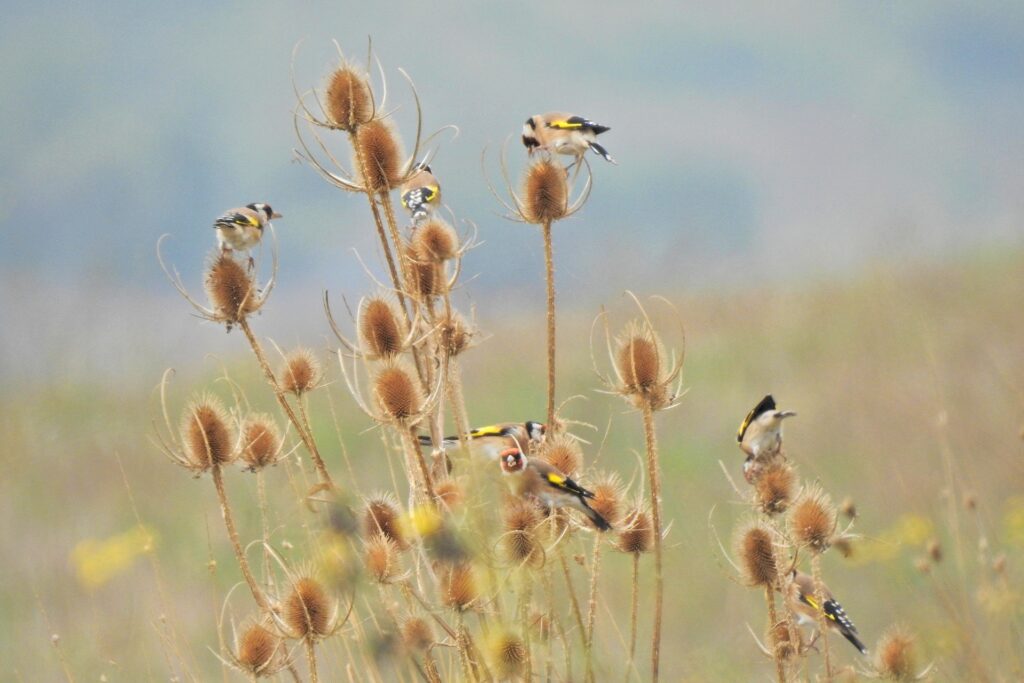
The province of Avellino represents the rural and scenic heart of inland Campania, where rolling hills, fertile valleys, karst plateaus, and mountain landscapes create a rich mosaic of habitats. Its combination of agricultural land, wetlands, and forested highlands offers excellent birdwatching opportunities throughout the year, with strong seasonal contrasts between breeding activity, migration, and wintering populations.
Birdwatching experiences in the province may include high-altitude wetlands such as Piana del Dragone, inland wetland environments of Lago di Conza, and the wider Irpinia countryside. Open ridges and mountain passes of the Picentini and Partenio ranges act as natural corridors for migrating raptors, while wetlands and reservoirs provide crucial stopover sites for waterbirds.
The Piana del Dragone is one of the most distinctive birding sites in the province, a high-altitude wetland surrounded by the Picentini Mountains. In spring, its meadows and reedbeds host a vibrant mix of grassland and wetland species, while the surrounding slopes and forested uplands support woodland specialists such as Middle Spotted Woodpecker, alongside a variety of forest passerines and raptors moving across elevation gradients.
The Lago di Conza area forms a key ecological corridor along the Sele River system. These wetlands are particularly important year-round for waterbirds, with Pygmy Cormorant regularly present, alongside Osprey using the area as a resting and feeding stopover during migration, while winter months bring concentrations of ducks and other waterfowl.
The Irpinia countryside is characterized by a patchwork of rolling farmland, vineyards, scrubland, and hedgerows, creating ideal conditions for steppe-associated and open-country species. Raptors such as Black Kite, Red Kite, and Short-toed Snake Eagle are commonly observed soaring over agricultural valleys, while species such as European Bee-eater, European Hoopoe, Calandra Lark, Black-headed Bunting, and Woodchat Shrike are typical highlights of the breeding season across these open landscapes.
Finally, the Partenio Mountains provide a dramatic limestone backdrop with panoramic viewpoints and forested slopes. These uplands connect Avellino to broader Apennine migration routes, enhancing its importance as a transitional zone between coastal and inland ecosystems, and supporting both woodland species and migrating raptors.
The combination of wetlands, rural mosaics, and mountainous terrain makes Avellino one of the most visually striking birdwatching provinces in Campania.
-
Monti Picentini and Piana del Dragone: The Monti Picentini Massif represents one of the main mountain systems of inland Campania, characterised by extensive beech forests, springs, and limestone reliefs of high landscape value. The high level of natural integrity supports a rich community of forest and mountain species, while ridgelines and valleys act as important ecological corridors for raptors during migratory movements. The Piana del Dragone, located in the heart of the Picentini Mountains, is a wide karstic basin surrounded by mountainous reliefs, where grasslands, seasonal wetlands, and open habitats alternate with woodlands and forested slopes. During wetter months, the basin hosts a large temporary water body that further increases the ecological value of the area.
-
Lake Conza: Lake Conza is one of the main artificial reservoirs in the southern Apennines and an important ecological node along the Sele Valley. Its shores, characterised by marshy environments, riparian woodlands, and grassland areas, host a remarkable variety of waterbird species throughout the year. The surrounding hills and agricultural landscapes create a diverse environmental mosaic that also supports species linked to rural and open habitats, making the area of high interest across different seasons.
-
Rural areas of Bisaccia: The hills of Upper Irpinia are characterised by cultivated fields, pastures, and fragments of natural vegetation. These landscapes, shaped by a long agricultural tradition, retain high ecological value for many species associated with agroecosystems and open habitats. The geographical position, on the border between Campania and Basilicata, further enhances the biological diversity of the area, particularly during migration and breeding periods.
-
Zungoli: Listed among the “Most Beautiful Villages of Italy,” Zungoli is set in a panoramic position along the hills of eastern Irpinia. Its historic centre, characterised by stone architecture and a well-preserved medieval layout, is embedded in a highly scenic rural landscape. The surrounding environment reflects typical Apennine scenery, with agricultural and hilly areas that contribute to the region’s natural richness. The ancient walls, rooftops, and historic buildings also provide shelter for several synanthropic species, which have coexisted with human settlements for centuries, finding suitable nesting and roosting sites in traditional built environments.
-
Day 1: Meeting in Naples and departure towards Irpinia. Stop at the Piana del Dragone and light lunch. Birdwatching activities in the Monti Picentini. Dinner and overnight stay.
-
Day 2: Breakfast. Departure towards Lake Conza. Birdwatching activities and packed lunch. In the afternoon, transfer to Bisaccia crossing the landscapes of Upper Irpinia. Dinner and overnight stay.
-
Day 3: Breakfast. Birdwatching activities in the Bisaccia area among cultivated fields and pastures. Light lunch. In the afternoon, visit to the historic village of Zungoli. Dinner and overnight stay.
-
Day 4: Breakfast. Birdwatching activities and transfer to Taurasi with an enogastronomic experience. Return to Naples and end of the tour.
| Package Type | Group of 4 participants | Group of 6 participants |
|---|---|---|
| Experience | € 7,350 | € 9,000 |
| Young | € 5,250 | € 6,000 |
The rates refer to the standard packages developed within the project and are calculated for groups of 4 or 6 participants. The difference between the Experience and Young versions is determined by the type of accommodation included and the services provided within the package.
It is possible to request a customised quotation for groups with a number of participants different from those included in the standard packages (either lower or higher), as well as for tailor-made itineraries, which can be adapted in terms of duration and geographical extension according to the specific needs of the group.
For further information and to receive a personalised offer, please contact the organisers.
What is included:
- Accommodation.
- Meals (3 breakfasts, 4 lunches, 3 dinners).
- Transfers to/from Naples and all internal transfers by private minivan or coach with driver (including tolls and parking fees).
- Scientific accompaniment by an ornithologist throughout the entire trip, including supporting materials for wildlife observation (binoculars, spotting scope, field guides, etc.).
- Enogastronomic experience with visit and tasting at a local wine producer.
- Guided visit to the medieval village of Zungoli.
- Entrance fees to nature reserves and WWF/LIPU Oases, where included in the itinerary.
- Basic insurance.
What’s not included:
- Optional tips for local guides.
- Anything not explicitly mentioned in the “What is included” section.
Information regarding rates and payment methods will be communicated by email after filling in the request form.

All our tours are organized in collaboration with the Travel Agency “Mama Tours”

Can’t find the experience of your dreams? Do you want to observe a particular species or visit a specific natural area?
We can create a 100% customized and personalized tour!